Posts

Showing posts with the label Rehabilitation

Does yoga work well for the treatment of addiction?

Image
  There are several applications for yoga in   rehabilitation . Yoga has helped people with mental disabilities by improving their capacity as well as physical coordination and social skills. Subjects with physical disabilities who practiced vigorous yoga had some of their practical competence restored. Along with helping people become stronger and more flexible, yoga provides many health benefits. Yoga will typically be beneficial in conjunction with a customized  programme, so if you are a dedicated yogi, this is frequently fantastic news because you do not have to forgo one for the other! •      Increased flexibility •      Cardio and circulatory health •      Protection from injury •      Maintaining a balanced metabolism •      Increased muscle strength and tone •      Improved respiration, energy, and vitality • ...
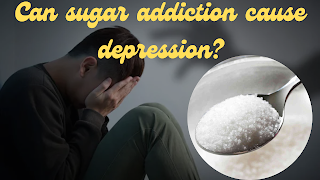
Can sugar addiction cause depression?

Image
In a few years, men who consume more than 40 grams of sugar daily are very likely to be diagnosed with depression . Sugar dependence. According to research, sugar has a higher potential for addiction than hard narcotics like cocaine. You could develop depression and other mood disorders if you are a sugar addict. Cravings and weariness are typical signs of sugar withdrawal, but some people also experience anger, depression, and other undesirable symptoms. Sugar-rich diets have been associated with cognitive decline, unfavorable neuroplasticity , and emotional problems like anxiety and depression. Consuming sugar makes people more impulsive eaters. According to studies, 80% of persons who gave up sugar and other harmful foods reported that their mental health had significantly improved. Researchers that looked at the group discovered that patients had less despair and anxiety, as well as less mood fluctuations and greater mental focus. Among the most typical signs of sugar addiction...

What is the Psychology of Addiction?

Image
Psychology has played a prominent part in both addiction research and treatment. It is an essential element of the interdisciplinary approach required by the 'biopsychosocial' conception. Cognitive theory-based, psychodynamic, and transtheoretical methods are the three primary categories of applied psychology in the field of addictions. This contribution contains brief summaries of the most common models. The Dynamic Model of Relapse from the learning theory field and the PRIME theory of motivation from the transtheoretical area are two important recent breakthroughs in addiction psychology. Both of these developments are deviations from conventional models' linear two-dimensional perspective in favour of multidimensional non-linear models that use theories like chaos theory and catastrophe theory in the modelling process. These techniques are similar to those used to describe and anticipate complicated phenomena like weather patterns in terms of explanations and predict...